

WHAT IS THE LEVEL OF FOOD SECURITY IN KYRGYZSTAN?
In the context of contemporary globalization, the importance of international rankings has been increasing. Rankings play a significant role in attracting foreign investment, establishing cooperation with international organizations, determining lending conditions, and shaping a country’s international image. Moreover, they serve as an analytical tool that helps identify the strengths and weaknesses of public policy, define reform priorities, improve the quality of governance, and enhance public accountability.
By examining the results of international rankings for 2025, it is possible to provide a comparative assessment of Kyrgyzstan’s current level of economic and social development. In this regard, the Global Hunger Index and the Global Food Security Index are particularly important indicators.
According to the 2025 Global Hunger Index, Kyrgyzstan ranked 43rd out of 123 countries. With a score of 8.0 points, Kyrgyzstan’s level of hunger is assessed as low.
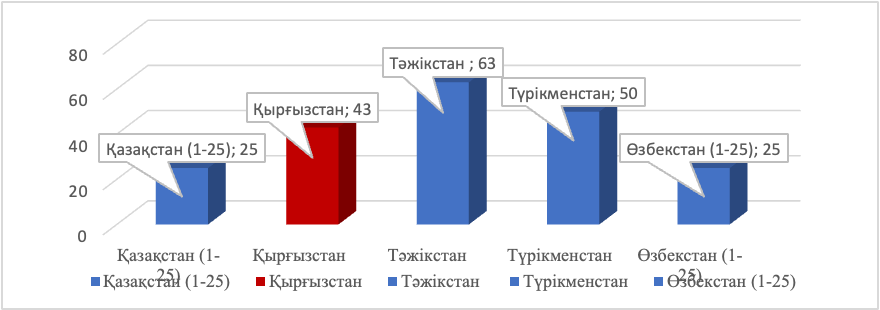
Figure 1. Rankings of Central Asian Countries in the Global Hunger Index
According to official data, Kyrgyzstan’s score in the Global Hunger Index declined from 18.4 to 8.0 points between 2000 and 2025. In other words, over the past 20 years the level of hunger in the country has decreased significantly, which represents a highly positive achievement for Kyrgyzstan.
In the Global Food Security Index for 2025, Kyrgyzstan ranks 43rd out of 123 countries with a score of 8.0 points, corresponding to a low level. However, data from the World Food Programme (WFP) indicate that 2.6 million people out of the country’s 7 million population (approximately 37%) are unable to afford a nutritious and balanced diet. As of July 2025, the country’s level of self-sufficiency in key food commodities is as follows:
wheat and flour products — 78.8%;
meat products — 79.8%;
vegetable oil — 53.5%.
The World Bank’s December 2025 report highlights that despite a decline in global food prices (notably wheat and rice), domestic food inflation in Kyrgyzstan has persisted.
Climatic fluctuations, including heat waves, along with water shortages led to a decline in grain production in 2025, exerting additional pressure on price stability in the domestic market. The World Bank’s Food Security Update report emphasizes that in lower-middle-income countries such as Kyrgyzstan, food inflation is driven not only by global price dynamics but also by logistics costs, energy tariffs, and the depreciation of the national currency.
Within the framework of state regulation measures, in 2025 the Government of Kyrgyzstan introduced export restrictions on socially significant food products, released wheat and flour to the market through state intervention funds, and implemented targeted social assistance mechanisms for vulnerable households.
Overall, the 2025 data indicate that Kyrgyzstan’s level of food security remains moderate but vulnerable. The intensification of climate risks, low agricultural productivity, and dependence on imports complicate efforts to curb food inflation. Therefore, in the long term, strategic priorities for the country should include diversification of the agro-industrial sector, effective management of water resources, enhancement of the competitiveness of domestic production, and strengthening of the social protection system.
Akbota Mukhametzhan